
OUR SERVICE AREA

Phone: (715) 696-6446
Email: service@cleankillpest.com
Mailing Address:
PO Box 26
Niagara, WI 54151
Copyright © 2026 Clean Kill Pest Control LLC.
Site design & hosting by North Country Website Design↗
Upper Peninsula and
Northern Wisconsin
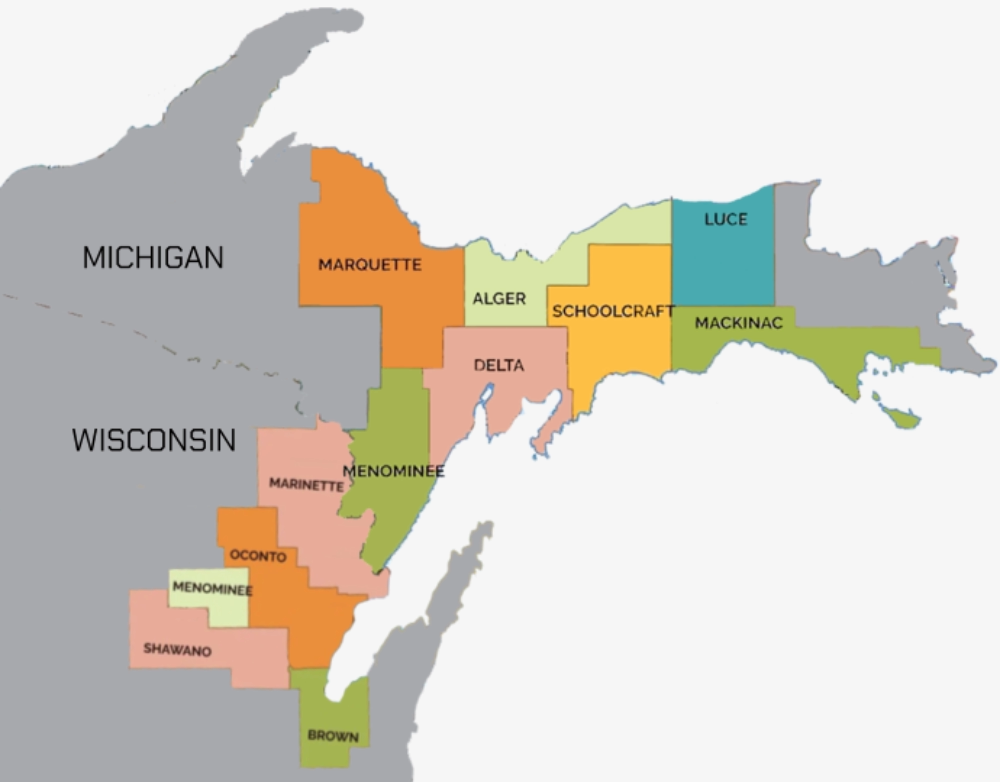

COUNTIES SERVICED
MICHIGAN AND WISCONSIN
Alger County
Brown County
Delta County
Luce County
Mackinac County
Marinette County
Marquette County
Menominee Counties
Oconto County
Schoolcraft County
Shawano County

- IDENTIFY A PEST -
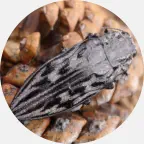
- PINE BORERS -
Latin Name: Genus Chalcophora
Length: 0.9-1.3 in
Color: Black, Gray, Brown, Blue, or Green
Sounds: Clicking/Chirping Noise
Digestive Tract: Yes
PEST OVERVIEW
Pine bark beetles or pine borers are the single most destructive pest which attacks pine trees. They are reproduce quickly, migrate, and
infest one active tree at a time, so it is important to start dealing with them immediately to minimize the spread to other trees.
As a softwood, pine trees damage quickly and are able to harbor more insects than hard woods over the same period of time. When a tree is
injured the sap runs freely and this increases the odds of attack by pine borers. Once the tree is targeted the beetles will penetrate the bark
and excavate tunnels between the bark and the wood of the tree.
WHY DO I HAVE THEM?
Pine trees that are stressed or weakened are more susceptible to attack by pine bark beetles. Only the southern pine beetle is known to
attack healthy trees. Typically, pine borers enter the tree at eye level and above. Look for tiny holes in the bark, and if you spot these beetles,
act quickly.
If you have a rust or bronze colored dead pine tree on your property, the abundance of the needles may indicate that it died quickly under
the attack from pine borers. You should consider removing the dead pine tree entirely from your property to deter the infestation of other
pine trees.
TIPS FOR CONTROL
To get your pest problem under control, inspection is the first and foremost step. This holds true whether you are tackling the situation
yourself or you are interested in a free estimate from our trained, experienced staff. Additional tips for prevention:
•
Keep your trees protected and healthy
•
Prune infested tree limbs
•
Remove and properly dispose dying trees
•
Avoid damage to tree trunks and roots
•
Avoid compacting the soil under the canopy of the tree
•
Apply water and fertilizer to important trees in your landscape


OUR SERVICE AREA
Phone: (715) 696-6446
Email: service@cleankillpest.com
Mailing Address:
PO Box 26
Niagara, WI 54151
Copyright © 2026 Clean Kill Pest Control LLC.
Site design & hosting by North Country Website Design↗
Upper Peninsula and
Northern Wisconsin
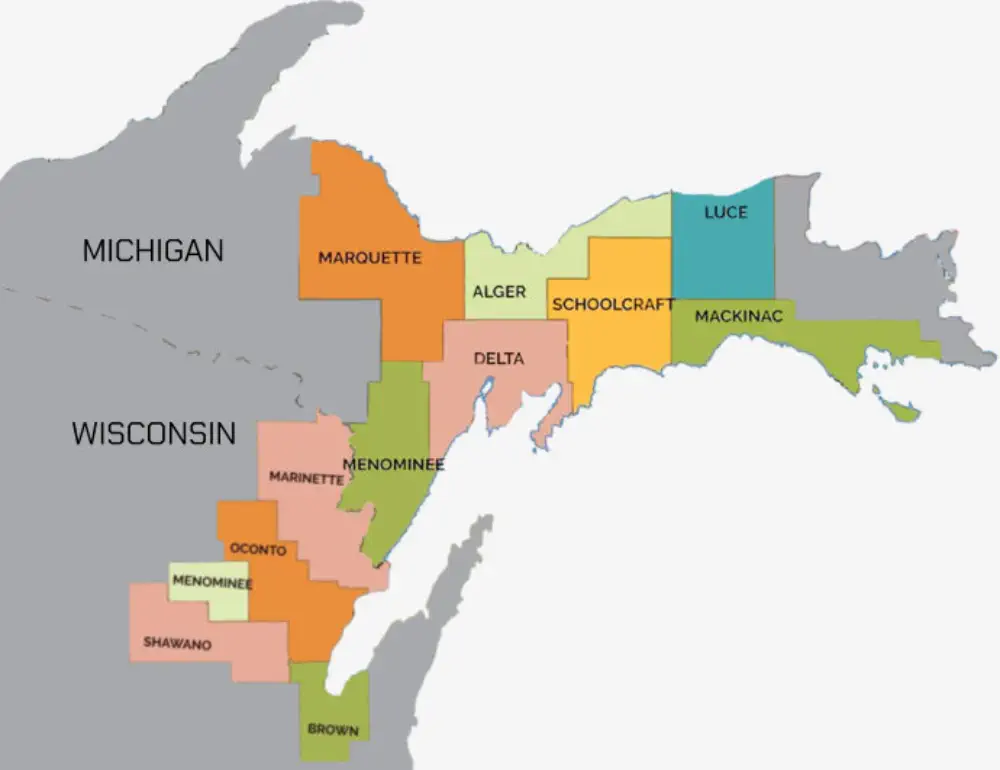

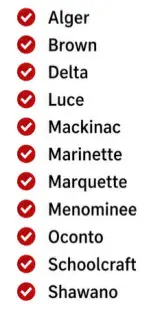
COUNTIES SERVICED
MICHIGAN AND WISCONSIN
Alger County
Brown County
Delta County
Luce County
Mackinac County
Marinette County
Marquette County
Menominee Counties
Oconto County
Schoolcraft County
Shawano County

- IDENTIFY A PEST -
- PINE BORERS -
Latin Name: Genus Chalcophora
Length: 0.9-1.3 in
Color: Black, Gray, Brown, Blue, or Green
Sounds: Clicking/Chirping Noise
Digestive Tract: Yes
PEST OVERVIEW
Pine bark beetles or pine borers are the single most destructive pest which attacks pine trees. They are reproduce
quickly, migrate, and infest one active tree at a time, so it is important to start dealing with them immediately to
minimize the spread to other trees.
As a softwood, pine trees damage quickly and are able to harbor more insects than hard woods over the same
period of time. When a tree is injured the sap runs freely and this increases the odds of attack by pine borers. Once
the tree is targeted the beetles will penetrate the bark and excavate tunnels between the bark and the wood of the
tree.
WHY DO I HAVE THEM?
Pine trees that are stressed or weakened are more susceptible to attack by pine bark beetles. Only the southern
pine beetle is known to attack healthy trees. Typically, pine borers enter the tree at eye level and above. Look for
tiny holes in the bark, and if you spot these beetles, act quickly.
If you have a rust or bronze colored dead pine tree on your property, the abundance of the needles may indicate
that it died quickly under the attack from pine borers. You should consider removing the dead pine tree entirely
from your property to deter the infestation of other pine trees.
TIPS FOR CONTROL
To get your pest problem under control, inspection is the first and foremost step. This holds true whether you are
tackling the situation yourself or you are interested in a free estimate from our trained, experienced staff.
Additional tips for prevention:
•
Keep your trees protected and healthy
•
Prune infested tree limbs
•
Remove and properly dispose dying trees
•
Avoid damage to tree trunks and roots
•
Avoid compacting the soil under the canopy of the tree
•
Apply water and fertilizer to important trees in your landscape


OUR SERVICE AREA

Phone: (715) 696-6446
Email: service@cleankillpest.com
Mailing Address:
PO Box 26
Niagara, WI 54151
Copyright 2026 Clean Kill Pest Control LLC.
Upper Peninsula and Northern Wisconsin
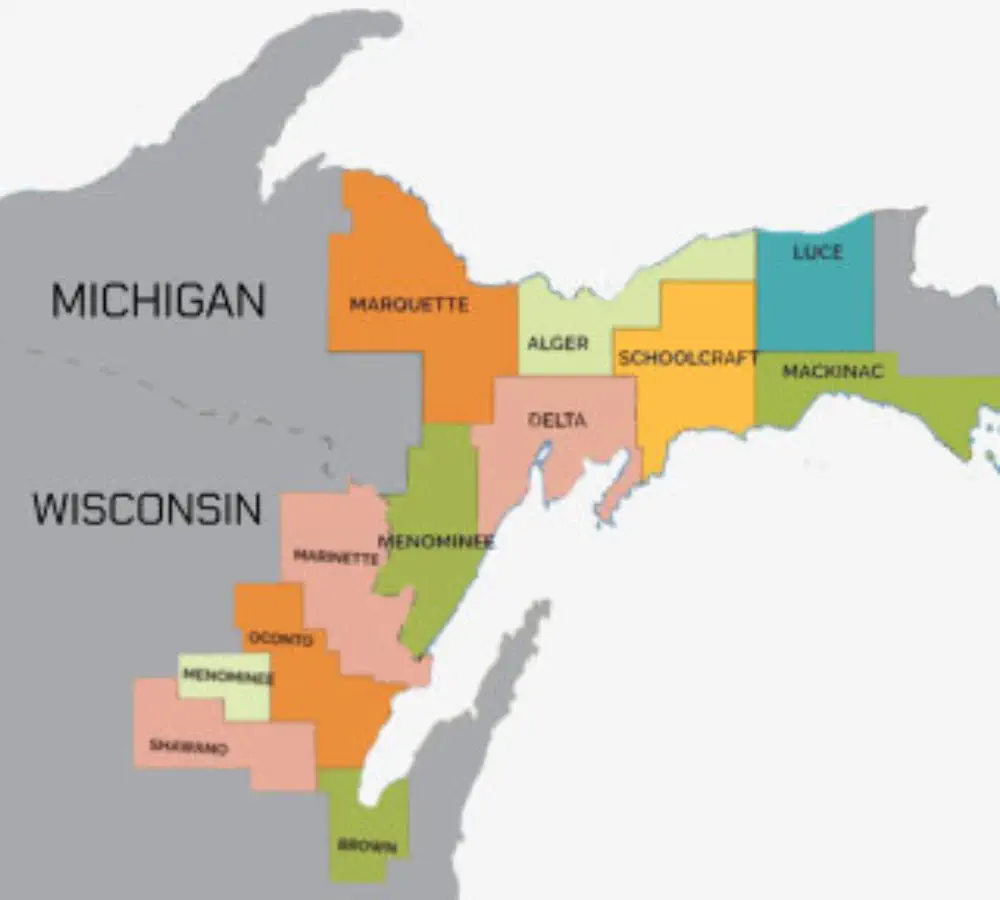

COUNTIES SERVICED
MICHIGAN AND WISCONSIN
Alger County
Brown County
Delta County
Luce County
Mackinac County
Marinette County
Marquette County
Menominee Counties
Oconto County
Schoolcraft County
Shawano County
- IDENTIFY A PEST -
- PINE BORERS -
Latin Name: Genus Chalcophora
Length: 0.9-1.3 in
Color: Black, Gray, Brown, Blue, or Green
Sounds: Clicking/Chirping Noise
Digestive Tract: Yes
PEST OVERVIEW
Pine bark beetles or pine borers are the single
most destructive pest which attacks pine trees.
They are reproduce quickly, migrate, and infest
one active tree at a time, so it is important to
start dealing with them immediately to minimize
the spread to other trees.
As a softwood, pine trees damage quickly and
are able to harbor more insects than hard
woods over the same period of time. When a
tree is injured the sap runs freely and this
increases the odds of attack by pine borers.
Once the tree is targeted the beetles will
penetrate the bark and excavate tunnels
between the bark and the wood of the tree.
WHY DO I HAVE THEM?
Pine trees that are stressed or weakened are
more susceptible to attack by pine bark
beetles. Only the southern pine beetle is known
to attack healthy trees. Typically, pine borers
enter the tree at eye level and above. Look for
tiny holes in the bark, and if you spot these
beetles, act quickly.
If you have a rust or bronze colored dead pine
tree on your property, the abundance of the
needles may indicate that it died quickly under
the attack from pine borers. You should
consider removing the dead pine tree entirely
from your property to deter the infestation of
other pine trees.
TIPS FOR CONTROL
To get your pest problem under control,
inspection is the first and foremost step. This
holds true whether you are tackling the
situation yourself or you are interested in a free
estimate from our trained, experienced staff.
Additional tips for prevention:
•
Keep your trees protected and healthy
•
Prune infested tree limbs
•
Remove and properly dispose dying trees
•
Avoid damage to tree trunks and roots
•
Avoid compacting the soil under the canopy
of the tree
•
Apply water and fertilizer to important trees
in your landscape
